AI chatbots for business: a complete guide for companies in Moldova
- Date: 2 August 2026
- 4 minutes read
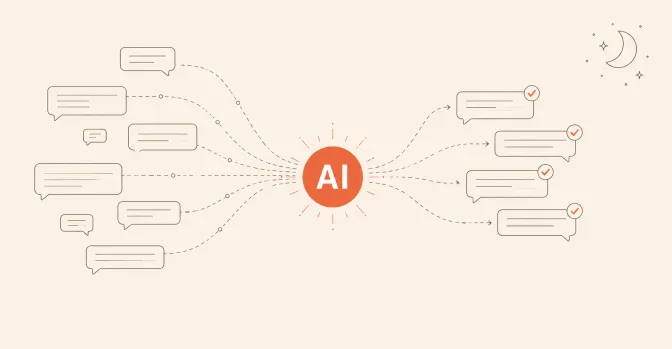
An AI chatbot is an assistant that answers customers in writing — on your website, WhatsApp, Instagram or Telegram — using content approved by your company. It handles common questions, collects enquiry details and hands the conversation over to a person when needed. For a business in Moldova the practical advantage is double: you respond faster, and you can serve customers in Romanian and Russian with a single solution.
In the Moldovan market, customers write in both languages — sometimes within the same conversation. Solutions that treat Russian as “an automatic translation of the Romanian” produce awkward replies. The correct approach: the core content is prepared and reviewed in each language, and the chatbot replies in the customer’s language. When choosing a provider, ask for a demonstration in both languages, not just one.
| Channel | When it makes sense |
|---|---|
| Website | You have website traffic and pre-purchase questions |
| WhatsApp / Viber | Customers already message you there |
| Instagram / Facebook Messenger | You sell or promote on social media |
| Telegram | A younger or technical audience; also internal notifications |
Start with the channel where you receive the most messages today — not with all of them at once.
A chatbot on approved content is usually implemented within a few weeks, and the cost depends on channels, languages and integration with your systems (CRM, stock, bookings). We break down the price factors in How much does an AI solution cost for your business?.
Yes, if it is configured correctly: the content is prepared and tested separately in Russian, not translated automatically. Ask for a demonstration in both languages before choosing a solution.
A correctly configured chatbot says openly that it does not know and hands the conversation to your team, together with the contact details and the context of the discussion.
Usually yes — enquiries can automatically become records in the CRM you already use, without replacing it.
No. It is enough to describe which questions you receive most often and on which channels. The rest is clarified through a conversation with practical questions.
Show us the channel your customers write on. We will recommend a practical first step — no technical brief required.
Discuss your project AI WORLD HUB Team
 Practical AI solutions for businesses in Moldova
We set out to bring artificial intelligence closer to every business, in a way everyone can understand.
The best candidates for AI automation are tasks that repeat daily, follow roughly the same steps and do not require a complicated decision: answering the same questions, copying information between systems, drafting...
The cost of an AI solution depends on three things: which process you want to improve, which systems the solution has to connect with, and how much it needs to be adapted to the way you work. A simple chatbot that a...